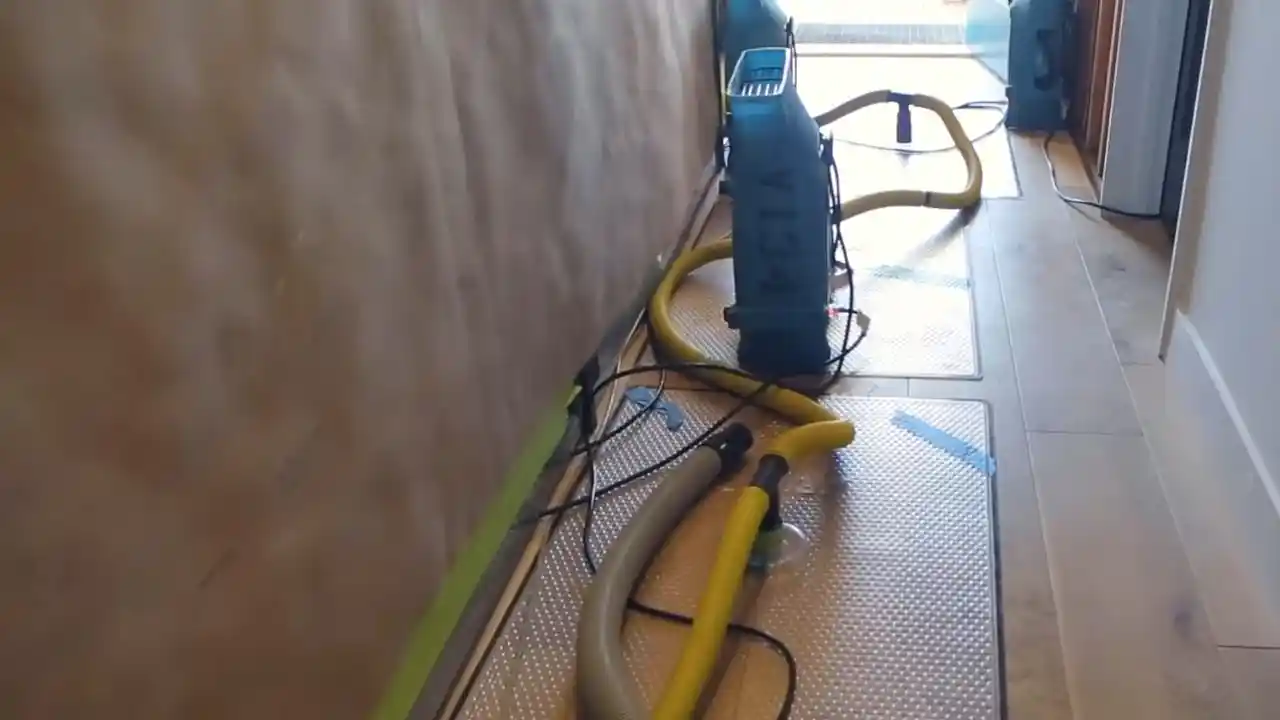
Water damage in a York home usually starts one of two ways: a supply line failure inside the house, or Codorus Creek and heavy regional rain pushing water into a creek-adjacent basement. Either way, the first 24 hours decide the difference between a wet carpet and a mold remediation job. Our York, PA water damage restoration crew answers day and night, pulls standing water with truck-mount extraction, and sets drying equipment before the moisture has a chance to travel into drywall and framing.
Why York Basements Flood
Downtown and creek-adjacent York neighborhoods sit near Codorus Creek, which has a documented flood history going back to the August 1933 storm and the June 1972 remnants of Hurricane Agnes. Army Corps flood control work, including Indian Rock Dam and the stormwater pump stations completed in 1980, cut the risk substantially, but it did not remove it. A heavy regional rain event or a failed sump pump during a spring thaw can still put water into a low-lying basement, especially in older homes near the creek corridor. This is common across North York, PA and the rest of York County too.
Symptoms Of A Water Damage Restoration Problem
Standing Water
Any depth of standing water in a basement or crawlspace needs extraction within hours, not days, to limit how far it spreads into framing.
Water Stains or Warping
Discoloration on drywall, baseboards that have started to bow, or a floor that feels soft underfoot all point to moisture that has already soaked into a material.
Musty Odor
A persistent damp smell without visible water is often a sign that moisture is trapped behind a wall or under flooring.
Rising Humidity
A basement that feels noticeably more humid than the rest of the house after a storm usually has a moisture source that needs to be found.
Need This Fixed Now?
Call and speak with a real plumber, no forms or call centers.
How We Handle A Flooded Basement
We start by shutting off the water source if the damage is plumbing-related, then extract standing water with truck-mount equipment. Moisture meters map how far water has traveled into drywall, subfloor, and framing before we place air movers and dehumidifiers. We log moisture readings over the drying period, which gives you a documented record for an insurance claim rather than a verbal estimate.
Doing Nothing Vs. Calling A Professional
Waiting It Out
- Standing water keeps wicking upward into drywall
- Humidity feeds mold growth within 24 to 48 hours
- No documentation if you file a claim later
Professional Extraction & Drying
- Truck-mount extraction pulls water same day
- Moisture mapping catches damage you can't see
- Drying log gives you a paper trail for insurance
What Water Damage Restoration Costs In York, PA
Exact quote after a diagnosis, before any work begins.
This line is dedicated to water damage and water mitigation calls. For other plumbing repairs, reach us at (717) 349-9373.
Common Questions
Coverage depends on the cause. Sudden pipe failures are typically covered under a standard policy, while surface water and creek flooding usually require separate flood insurance. We document the source and the drying process so you have what your adjuster needs either way.
A basement with standing water pulled the same day typically needs three to five days of active drying equipment before materials read dry on a moisture meter, though a heavily soaked slab or framing can take longer.
Porous materials that stayed wet more than 24 to 48 hours usually need to come out to prevent mold. We'll tell you honestly what can be dried in place and what should be removed.
We provide the documentation, photos, and moisture readings your adjuster needs. You stay in control of the claim, and we can speak with the adjuster directly if that's helpful.
Water mitigation is the immediate stop-the-damage step: extraction and drying. Restoration can include repairing what the water damaged afterward. We handle the mitigation side and can advise on next steps for repairs.
Visible mold growth and a strong musty smell after 48 hours of moisture are both signs mold has started. We flag it honestly rather than guessing.