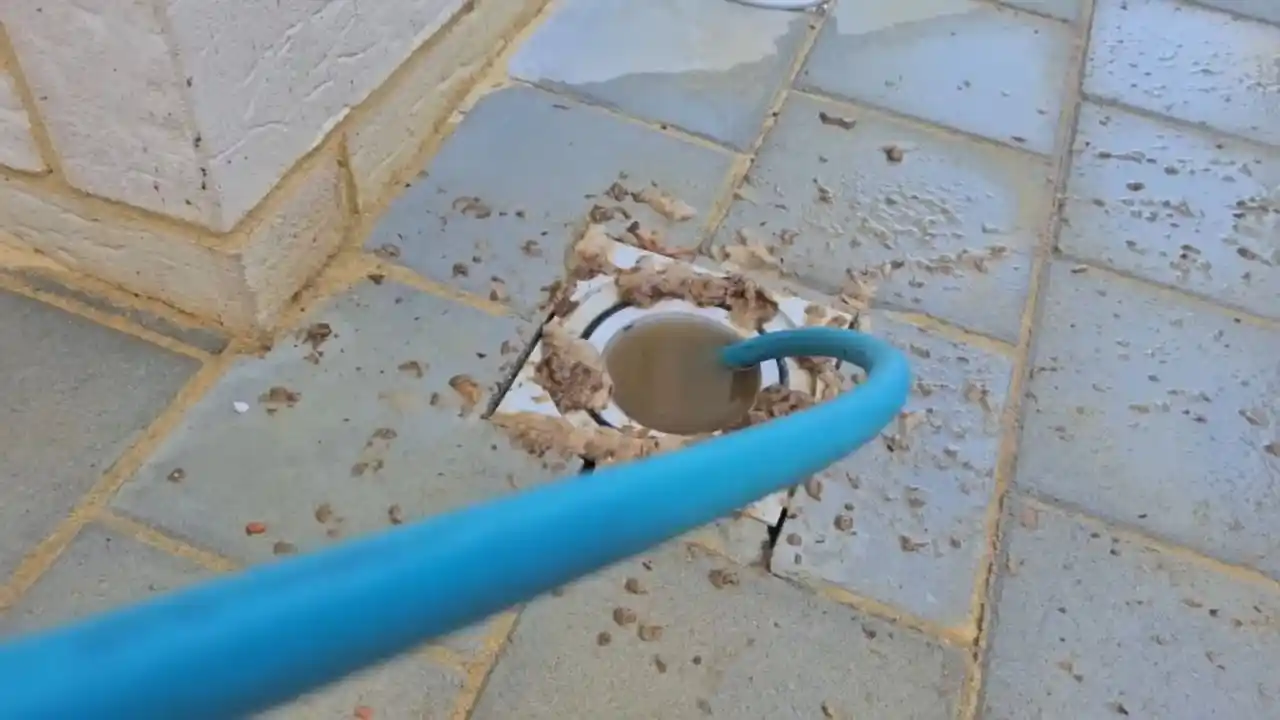
Multiple fixtures draining slowly at once, a backup into a basement floor drain, or a clog that keeps returning in the same spot are the signs that point toward a main line issue rather than a single blocked trap. Drain cleaning carries real weight as a York, PA search term because of the city's housing stock: much of downtown still runs on pre-1960 clay or cast-iron drain lines, mature street trees cause genuine root intrusion, and row houses in the historic core often share a single lateral sewer line between properties. We use a cable machine for standard clogs and a camera to confirm anything recurring, with same-day attention for an active backup.
Why York Drains Clog More Than Average
Clay and cast-iron pipe, common under pre-1960 York homes, develops rough interior surfaces and joint gaps over decades that catch debris and let tree roots in. Row houses in the historic core sharing a single lateral line add a complication unique to this market: a clog can originate at a neighboring property and still back up into your basement. This is common across North York, PA and the rest of York County too.
Symptoms Of A Drain Cleaning Problem
Slow Draining Sinks Or Tubs
Multiple fixtures draining slowly at once usually points to a main line issue rather than one clogged trap.
Gurgling Sounds
A gurgling toilet or drain when another fixture is used is a sign of a partial blockage further down the line.
Backup Into A Floor Drain
Water backing up into a basement floor drain is one of the clearest signs of a main line clog, not a fixture-level one.
Recurring Clogs In The Same Spot
A drain that clears temporarily and clogs again within weeks usually has a root intrusion or structural issue, not just debris.
Need This Fixed Now?
Call and speak with a real plumber, no forms or call centers.
How We Clear A York Drain
We start with a cable machine for most standard clogs, and move to hydro jetting or a camera inspection when a drain keeps recurring, which is often a sign of root intrusion in an older clay line. A camera lets us show you exactly what's happening inside the pipe rather than guessing.
Doing Nothing Vs. Calling A Professional
Store-Bought Drain Cleaner
- Chemical cleaners can damage older clay and cast-iron pipe
- Rarely clears a root intrusion or a shared-lateral clog
- Repeated use often makes the real problem harder to diagnose
Professional Cable Or Jetting Service
- Cable clears standard clogs same visit
- Hydro jetting fully clears root intrusion in older lines
- Camera inspection confirms the fix instead of guessing
What Drain Cleaning Costs In York, PA
Exact quote after a diagnosis, before any work begins.
Common Questions
Pre-1960 clay and cast-iron lines develop rough interior surfaces and joint gaps over time, and mature street trees common in older neighborhoods send roots into those gaps.
Yes. We locate where the shared lateral connects and can camera-inspect it to find whether the clog is on your side or theirs.
Yes, when done at the right pressure for the pipe material. We assess the line's condition before jetting an older clay or cast-iron run.
Cabling and snaking describe the same basic method: a flexible cable cuts through a clog. Jetting uses high-pressure water to scour the full pipe wall instead. We use a cable for most standard kitchen and bathroom sink clogs, and move to jetting when a line keeps recurring.
Recurring kitchen sink backups usually mean grease or food debris building up in the same section of pipe repeatedly, which a one-time cabling doesn't fully address. A jetting service clears the buildup along the full pipe wall rather than just cutting a path through it.