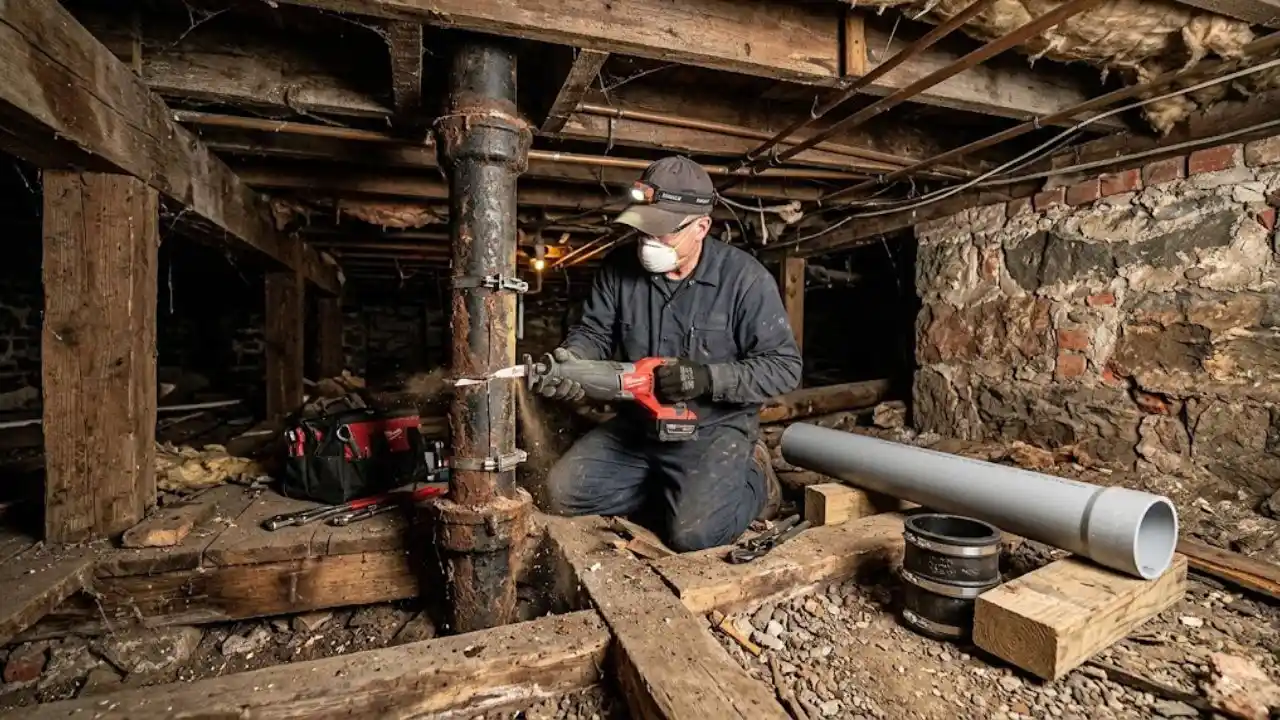
Northwest York's Historic District, with 815 contributing buildings developed between 1882 and 1930, is one of the most architecturally significant parts of the city. It's also a part of town where plumbing work looks a little different than it does in newer construction. Whether you're buying a home here or planning a renovation, here's a practical checklist to work through.
If You're Buying: What To Check Before You Close
- Ask the seller directly whether the home still has original galvanized supply lines, or whether any portion has been repiped, and get it in writing if they say it's been updated
- Run every faucet in the house for a full minute and watch for rusty or discolored water, especially the first water out after the house has sat unused, which is a sign of galvanized pipe corrosion
- Ask specifically whether the heating system is original boiler and radiator, and if so, get the age and last service date from the seller or their disclosure
- Check whether the home's drain lines are clay, cast iron, or have been updated to PVC. A home inspector may not always specify this unless asked directly
- Ask whether a sewer camera inspection has ever been done, and if not, consider getting one done as part of your inspection contingency, since it's the only way to confirm the condition of a line you can't see
- If the home is in the flood-adjacent part of the historic district near Codorus Creek, check the basement for efflorescence or past water staining even if it looks dry now
What's Typically Original In This Era Of Home
Homes in this development window commonly kept boiler and radiant heat systems, along with clay or cast-iron drain lines and, in some cases, galvanized supply piping that's original or close to it. Not every home has all three, but it's common enough that we plan for the possibility on every historic-district call.
If You're Renovating: Sequencing That Saves Money
- Get any repiping or major drain line work done before finishing walls or flooring, not after. Opening a finished wall a second time to fix plumbing costs meaningfully more than doing it during an already-open renovation
- If you're updating a kitchen or bathroom, ask specifically whether the supply lines feeding that room are part of the original system or already updated, since it affects whether a full repipe should happen now or can wait
- Historic district properties sometimes have additional considerations around exterior-visible changes through the local historic commission. This mostly affects visible elements like exterior vent stacks or meter placement, not interior plumbing work, but it's worth a quick check before assuming no review is needed
- If the home runs original boiler heat and you're renovating around it, confirm whether the renovation plan keeps that system or transitions to forced air, since that decision affects wall and ceiling openings very differently
Common Calls We See In This District
Boiler repair tops the list, along with basement waterproofing given the district's age and construction era, and drain cleaning for the original clay lines many of these homes still run. Whole-house repipe conversations come up too, usually once a home's galvanized supply lines have started producing recurring leaks or the rusty-water pattern described above.
Our Approach
We don't treat a historic-district call the same as a standard suburban repair. We ask about the home's age and history upfront, and we're upfront in return about what we're likely to find and what a fix will realistically involve for a home of that era, including when a smaller repair now is the right call versus when it's better to plan for a fuller repipe.
If this sounds like what you're dealing with, our boiler repair and whole house repipe pages go into more detail, and we serve North York, PA along with the rest of York County on the same call-only basis described here.