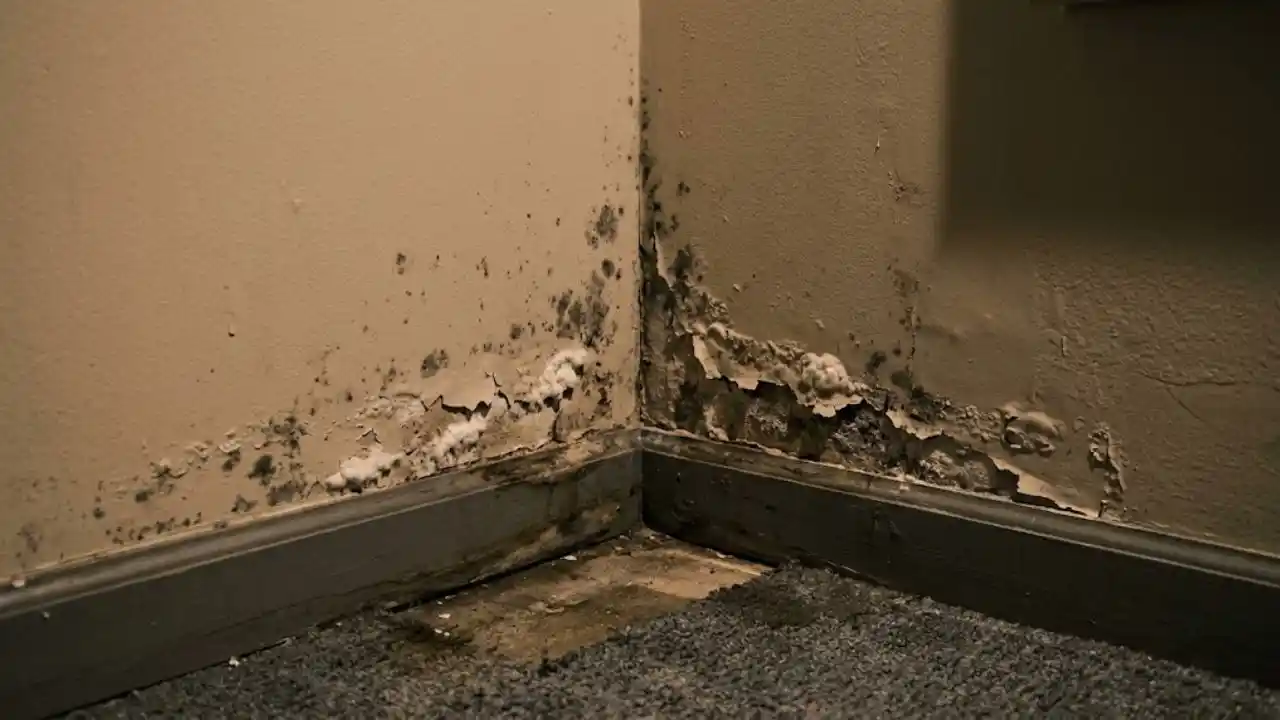
A musty smell in the basement without any water you can actually see is a common complaint, and it usually comes down to one of two distinct causes that need two different fixes. Guessing wrong means paying for a fix that doesn't solve the actual problem. Here are two simple tests that tell you which one you're dealing with.
Cause A: Slow Water Entry Through The Foundation
Water can enter through a foundation wall or floor joint slowly enough that it evaporates before it ever pools visibly, especially in a basement with decent airflow. The smell is often the first sign, arriving well before any standing water would.
Cause B: Chronic High Humidity With No Active Leak
Not every musty basement smell means active water entry. Basements naturally run more humid than the rest of the house, and that alone, combined with limited airflow, can create the same smell without a specific leak anywhere.
Test 1: The Foil Test (Checks For Moisture Coming Through The Wall)
- Dry a section of your foundation wall completely with a towel, then tape a piece of aluminum foil, about 12 inches square, directly to the dry concrete using duct tape on all four edges so it's fully sealed
- Leave it for 24 hours
- Check the foil. If moisture has collected on the outside surface (facing the room), that's condensation from humid basement air, pointing toward Cause B
- If moisture has collected on the inside surface (against the wall) or the concrete behind it feels damp, that's moisture actively passing through the wall itself, pointing toward Cause A
Test 2: Check For Efflorescence
Look closely at your foundation walls, especially near the floor, for a white, chalky mineral deposit. This is efflorescence, left behind as water moves through the concrete and evaporates. If you see it, water has been moving through your foundation at some point, even if it isn't actively happening right now. This is a strong supporting sign for Cause A, especially combined with a foil test that showed moisture on the wall-facing side.
What To Do Based On Your Results
- Foil test showed moisture on the wall side, or you found efflorescence: this points to actual water entry through the foundation. A dehumidifier will mask the smell but won't fix the underlying cause. This is a basement waterproofing conversation, specifically an interior drainage system that captures and redirects the water before it reaches your basement floor
- Foil test showed moisture on the room side only, no efflorescence: this points to humidity rather than active water entry. A dehumidifier sized to your basement's square footage, combined with improved airflow (a small fan or opening basement windows during dry weather), often resolves this without any structural work
- Not sure, or results were mixed: a professional moisture inspection can measure relative humidity and wall moisture content directly with a meter, giving you a more precise answer than the DIY tests alone
Why This Is Worth Sorting Out Now
Whether the cause is slow water entry or just chronic high humidity, both create conditions where mold can eventually take hold if left unaddressed. The good news is that neither cause, caught at this early smell-only stage, is an expensive problem yet. Catching it now with a simple test is a lot less involved than addressing it after it's turned into a visible moisture or mold issue.
If this sounds like what you're dealing with, our basement waterproofing and water mitigation pages go into more detail, and we serve North York, PA along with the rest of York County on the same call-only basis described here.