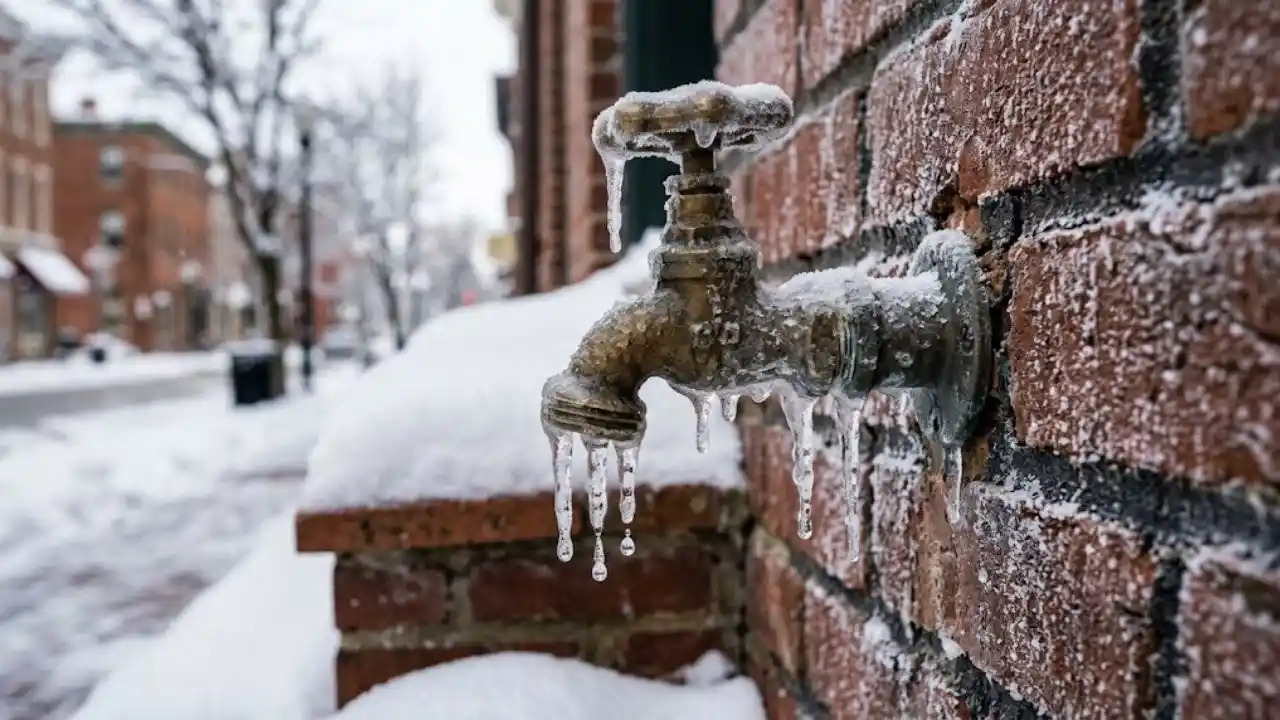
York, Pennsylvania sits in a humid continental climate that transitions toward humid subtropical, which is a technical way of saying it gets a real winter. Understanding the actual numbers, which specific pipes are at risk, and the exact steps to protect them is more useful than a general warning to "be careful in winter."
The Numbers That Actually Matter
York's January mean daily high is around 41.2°F, and the mean daily low is around 21.3°F. That's not an occasional cold snap, that's a regular, expected overnight temperature for the coldest month, and it repeats across December through March along with roughly 24.6 inches of snow annually. The general rule of thumb plumbers use: pipe freeze risk becomes real once sustained outdoor temperatures drop below about 20°F for six hours or more, especially overnight. York hits that range on a normal basis most winters, not as a rare event.
Step 1: Identify Your Actual At-Risk Pipes
Not every pipe in your house is equally at risk. Interior pipes running through heated, insulated walls almost never freeze. The ones that do are specific and identifiable:
- Supply lines running through an unheated crawlspace or basement, especially near a foundation vent
- Pipes inside exterior walls, particularly on the north side of the house where sun exposure is lowest
- Any line serving an outdoor spigot or hose bib
- Pipes in an unheated garage, or running through it to reach another part of the house
- Lines in a vacant or seasonally-used property where the heat has been set low or off entirely
Walk your own house against this list once, before the first hard freeze of the season. It takes ten minutes and tells you exactly which pipes deserve extra attention rather than treating the whole house as equally at risk.
Step 2: The Complete Winterization Checklist
- Disconnect and drain all garden hoses, and shut off any interior valve that feeds an exterior spigot, then open the spigot to let it drain completely
- For any at-risk pipe identified in Step 1, wrap it with foam pipe insulation sleeves, sold by the linear foot at any hardware store and simple to install by hand
- In a crawlspace, close foundation vents for the winter if your crawlspace isn't actively heated, which cuts down on the cold air reaching exposed lines
- Keep cabinet doors open under sinks located on exterior walls, allowing warmer house air to reach the pipes inside
- Set your thermostat no lower than 55°F if you're leaving the house for an extended period, never fully off
- Know where your main water shutoff valve is located and confirm it turns freely before you need it in an emergency, not during one
- For a pipe that has frozen in the same spot in previous winters, that's worth a permanent fix through insulation or rerouting rather than repeating the same emergency call every year
Step 3: What To Do During An Active Cold Snap
- Let faucets served by at-risk pipes drip slightly during the coldest overnight hours. Moving water is much less likely to freeze than still water
- If you're heading out of town during a forecasted hard freeze, don't lower the heat further than usual, even to save on the bill. A frozen and burst pipe costs vastly more than a few extra days of normal heating
- Watch for a sudden drop in water pressure at any fixture, which can be an early sign that a line somewhere is starting to freeze and restrict flow before it fully blocks
If A Pipe Freezes Anyway
The safest response is controlled, gradual heat rather than an open flame: a hair dryer held a safe distance away, or a space heater positioned near an accessible section. Never use a blowtorch or other open flame near a pipe. If the frozen section is hidden inside a wall, or you're not confident handling it yourself, that's the point to call rather than risk the pipe bursting mid-thaw. Catching it while it's frozen, rather than after it's split, is the difference between a straightforward thaw and a full water damage cleanup.
If this sounds like what you're dealing with, our frozen pipe repair and burst pipe repair pages go into more detail, and we serve Hallam, PA along with the rest of York County on the same call-only basis described here.