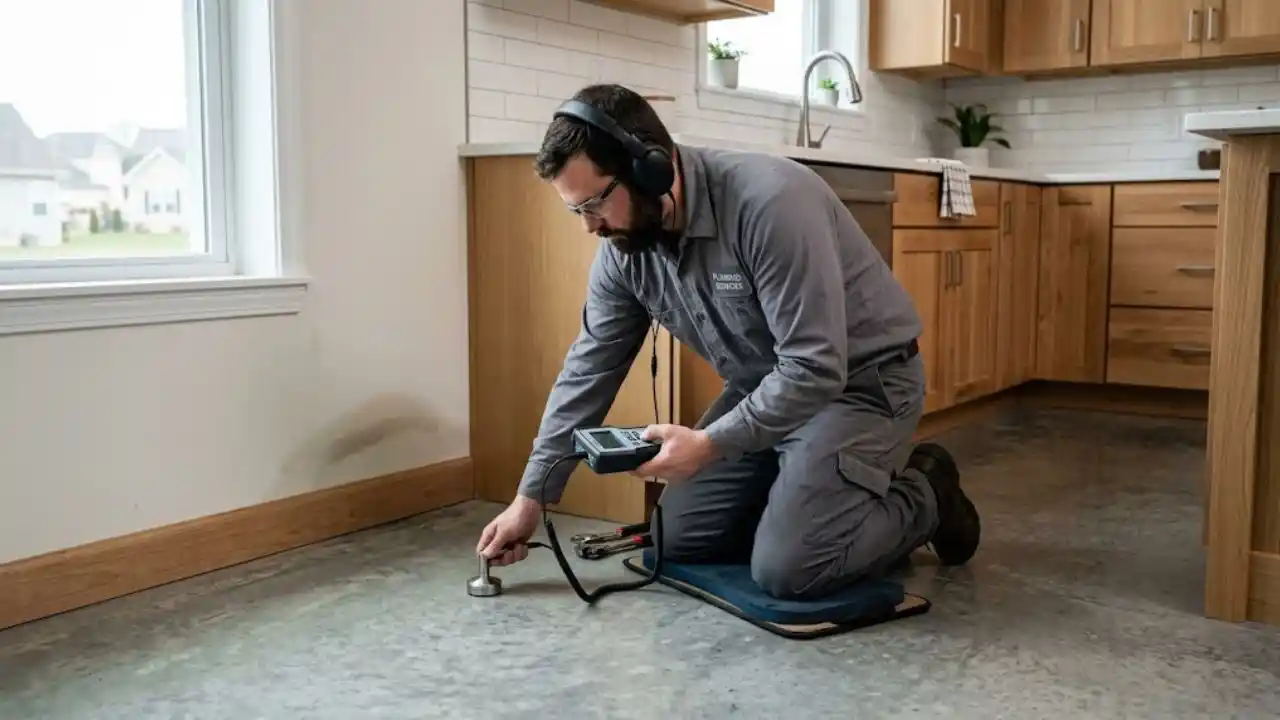
A slab leak, a leak in a water line running under or through your home's concrete foundation, is one of the trickier plumbing problems to catch early, because there's often no visible water at all until it's been leaking for a while. Here are the real warning signs, and a DIY test you can run tonight to confirm whether you actually have one before you pay for a professional diagnosis.
The Warning Signs, In Order Of Reliability
- A warm spot on the floor: if a section of your floor feels noticeably warmer than the rest, especially over a slab, that's a strong sign of a leaking hot water line underneath. This is one of the more reliable early indicators, since it shows up before visible water damage does
- A water bill that doesn't match your usage: if your household's water usage hasn't changed but your bill has climbed steadily, and you've already ruled out an obvious running toilet or dripping fixture, a slab leak is one of the more common remaining explanations
- The sound of running water with everything off: if you can hear water moving somewhere in the house when every fixture is off, that's worth taking seriously, even if it's faint. A quiet moment, like late at night, is when it's most noticeable
- Cracks or subtle movement in the foundation: in more advanced cases, water escaping under a slab can start to affect the foundation itself. This is a later-stage sign, and worth addressing before it progresses further
The DIY Water Meter Test
This test takes about 30 minutes and tells you definitively whether water is escaping somewhere in your system, even if you can't see it.
- Make sure no water is running anywhere in the house: no dishwasher or washing machine cycles, no one showering, and confirm your irrigation system (if you have one) is off
- Locate your water meter, usually near the street in a small ground-level box, or in the basement on older York homes
- Record the exact reading, including the small dial or digit indicators used for low-flow detection
- Wait 30 minutes without using any water in the house at all
- Check the meter again. If the reading has changed at all, water is moving somewhere in your system even though nothing is turned on
- If the meter shows movement, the next step is narrowing down where. Check your water heater, toilets (a silent running toilet is the most common false positive), and any visible exposed plumbing first, since those are easier and cheaper to rule out than a slab leak
If you've ruled out toilets, the water heater, and any visible fixtures, and the meter is still moving, that points toward a leak somewhere in a line you can't see, which includes a slab leak as one real possibility among a few others like a leak in an underground irrigation line.
How We Find It Without Tearing Up Your Floor
Once a hidden leak is confirmed, electronic and acoustic leak detection equipment lets us trace the sound and pattern of water movement to a specific location before any concrete gets opened. That means you're not paying to dig up your whole slab on a guess. We confirm the location first, then open only that specific area.
What Happens After The Leak Is Located
Depending on the pipe's condition and how localized the damage is, the fix is either a direct repair of that section or, if the surrounding pipe shows similar age-related wear, a rerouted line that bypasses the slab section entirely rather than repeatedly repairing the same aging pipe. We'll walk you through both options honestly once we know exactly what we're dealing with, since a slab leak in an otherwise sound system is a very different repair than one in a system where the rest of the piping is close behind it.
If this sounds like what you're dealing with, our leak detection and whole house repipe pages go into more detail, and we serve Valley Green, PA along with the rest of York County on the same call-only basis described here.